You are warily approaching the first sentence of my new novel, not wanting to be taken unaware, or not wanting to be plunged into something from which there is no perceptible exit or perhaps both at once, separate and inseparable concerns. The opening sentence, with your unspoken consent, has edged its way into the barely remembered past. You are now looking at the third sentence of this still untitled work. I imagine you reading my words as they come to mind so, in a certain sense, you can say that I am writing them for you, which is only true in the most reductive context. I am writing this novel because writing novels is what I do and my inner clock tells me�this is just a metaphor, you understand, I have no inner clock�that the moment has come to put everything else aside and begin the next chapter in my ongoing story as novelist. There is no particular reason why I am beginning now and not last month or tomorrow or the week after next. That's just the way it happened to play out. It was, in fact, this morning, after my breakfast of muesli with 14 slices of banana and a touch of yogurt, after checking out last night's scores, after taking my 7 minute shower, that the book you are reading announced its intention to get its not quite fully imagined presence on the page. Let me say, before I get on with the game, why I imagine you as my reader and not someone else. Writing a novel for all its aggressive gyrations, for all its assaultive and invasive aspects, is a gesture of love between writer and reader. In whatever transactions there have been between us over the years, I am aware that you have been the more loving. So this novel, which I'm writing with you in mind as its reader, is a way, as I see it, of redressing that discrepancy. I realize that this is a displaced gesture, but given my emotional limitations it is tantamount to taking off my clothes under a spotlight on a public stage. No appreciation is asked for or expected. That's not absolutely true. Relying on your generosity, I hope that you will stay with me, even in the face of disappointment, to the final gesture of this book�the last word of the last sentence. Before I get too far along, I'd first like to get your opinion of the novel's informing idea, which is this. A writer, not me exactly, though someone so much like me that only you could tell us apart, is addressing his not yet fully conceived novel, to an unnamed woman, known only as "you," who is, though you might not see it this way at all, a coded version of you. The novel, while not itself a love letter, is offered as an expression of love in that it is written with a sustained vision of you processing each word. You may find this a larger burden than you want to take on and, if so, I apologize in advance. Still, I've disguised the facts of our not easily definable relationship sufficiently to protect your privacy. Whatever other readers choose to think, no one can know absolutely that the "you" of the novel is you unless you make a point of acknowledging it. You may even have your doubts�fiction, as you know, is its own code�but all I can do is assure you that if it's not you, it's no one else. So that's the premise of this book, or, if you will, its argument. Where's the universality, you might ask, or someone less generously disposed, a critic perhaps, might ask. Its universality is in its particulars, I am quick to answer, but you are right to think that my reply is evasive. Where are its characters beyond the generic abstractions of you and me? What's the story it wants to tell? All of these questions will be answered, I want to believe, at some point in the proceedings, or possibly not. The fact is, I don't have a clue right now as to what comes next. The book you are reading�are you still with me?�is making itself up, catch as catch can, as it goes along. I am hoping to tell a story that, among a universe of stories, would be the one, if you had world enough and time, you would like most to read while reclining in your oversized bed, head propped up at a 60 degree angle on a cushion of three goosedown pillows. My knowing your favorite authors is of no help, is of negative help, in the present situation. To imitate a book you (and I) admire would be to offer, inescapably, a second hand pleasure. I also happen to know how much you dislike false sentiment so, insofar as I'm in control of what I'm doing, you'll find no appeals, spurious or otherwise, to the oversubscribed heart. Of course placing all these restrictions on my narrative makes it a little tricky to get the ship out of port. What I may have to do, assuming a certain sympathy between us, is write the book necessity and obsession dictate and trust that you will find its story at once familiar and strange. It will be a test case for both of us in that if the book means nothing to you neither of us is the person the other imagined. Of course if you don't respond to the book, if you don't love it so to speak, it may only be that I have failed to realize my vision. I am considering telling two stories, on the surface quite different from one another, spliced together in alternating sentences. Not alternating sentences perhaps�that might give you a headache or cause you to throw the book against the wall, which could cause damage to the spine�but, say alternating paragraphs or alternating pages. I might have to settle for alternating chapters. For as long as I've known you, you've been an unblushing admirer of the bold and unexpected. The book I am writing with you in mind will be nothing if not unexpected. I am trying to remember the first time I was aware of your existence. We were at a large party, as I recall, and I noticed you on the other side of the room talking to someone I knew slightly. It struck me that I might go over to this distant acquaintance and say hello and so wangle an introduction, but then you moved on to someone else or someone engaged me in a conversation and I lost sight of you. Eight months passed before I saw you again. Leaving the party, we rode down together in a crowded elevator, each looking at our shoes. Of course, I can only really speak for my own averted glance but given the sympathy we shared from the outset, I imagine we were both employing the same evasive tactic. My shoes, as I recall, were New Balance cross trainers with an ostentatious gray and yellow design. Years later, when we were already friends, I never mentioned to you that I had been aware of you, had kissed your left knee (perhaps it was the right) in the imagination's overheated bedroom, long before we were introduced. It's odd, but I can't remember the occasion when we were actually presented to one another, which only means that our relationship begins and ends for me in the conflation of memory and fantasy, and the literal moment of our meeting is unimportant, just a passing blip in an extensive continuum. Perhaps we introduced ourselves and this meeting I can't remember took place in another elevator in a different building going up to the penthouse apartment of another party. "We've met before," I said to you (I believe). "Have we?" you said, studying my face for clues. "I'm sure I would have remembered." "Thank you," I said and you looked oddly at me then. What I took to be a compliment, that I was unforgettable in some not easily defined way, had been meant as something else. I think it was what I admired most about you, your capacity to keep those who aspired to get close to you slightly off-balance. You were seeing someone, you let me know, though you accepted my offer to go somewhere for a cup of coffee. That may have been another time, a time I bumped into you at a publication party at an overcrowded West Side apartment, and I've dovetailed the two in memory. We went for a drink instead of coffee, didn't we, though at that point we were both already sufficiently besotted. The place we chose� it was more that the place chose us�was too noisy for conversation and so we went to my apartment, which was only a few blocks away, to continue our tenuous connection. Unless my memory is even more unreliable than I suspect, that was the only time we went to bed together. Its awkwardness was what made it so touching and memorable. An intensity of feeling undermined the elegance of the act itself. You warned me afterward that what happened between us would never be repeated. Never, you insisted, though not without notable regret. Still, I remained hopeful that a time would come eventually, a sudden change of emotional season, and we would again fall into each other's despairing embrace as we had that first night. In the meantime, we became friends, at least that's how it reads in my scenario, better friends no doubt than had we continued as lovers. I'd like to believe that that's what you had in mind when you announced with that unwavering certainty so characteristic of your style, moments after our artless grappling on my unmade bed, that this was it, the first and last and only time. There were other opportunities, other evenings when I sensed you were willing, but you see, and I'm sure you knew this all along, I felt as your friend that it would be a form of betrayal to undermine your resolve. The sexual afterglow I carried around with me for months, years perhaps, after our near-miraculous improvisatory encounter eventually dissipated or metamorphosed , as I like to think, into a kind of extraordinary sympathy than transcended the need for sexual affirmation. If none of this meets with your view of how things started between us, it may be because I have a history of confusing the real word with the more compelling narrative of my fantasies. My story, I'm embarrassed to admit, is infinitely revisable. And so�you would be the one to make this determination�our history may be just another fantasy in that baroque chimera I have the dishonor to call my life. I did, as it happens, write a story based on my subjective experience of our relationship with a very different conclusion from the way things between us actually played out. It seems fitting to me that that story should be a part of this novel you are reading and, in time (and space), it will earn its way into these pages. I don't want any surprises. I want it all to surprise. Before I move on, before I get what needs to be behind us filed away, I want to make one last disclaimer. The things I've said to you here I've also in the past said to others and will, as history repeats itself, probably say again to others still, which doesn't make them any the less sincere. At least in your case, I never cease to mean them. Well, isn't that the kind of thing every con man says? I am a liar. I freely confess�no knife at my throat�that I make things up and therefore (with expectation of your acceptance) I'm asking for your trust. If you can't trust me, who has shown you his most disreputable side, who can you trust? Before we actually met, I said to you in the elevator, muttered it in a way to make it impossible for you to be certain that you heard anything at all�remember we were both looking at our feet at the time�that�. Perhaps you heard me and only pretended not to. In any event, you didn't respond and I did not repeat my aggressive petition. It is probably a flaw in my nature but I'd rather�perhaps this was not so true when I was younger�be loved than fucked. So as we became close friends it was a tacit agreement between us that the prospect of sex was outside the equation of our friendship. Whatever sexual feelings came up in our encounters would of necessity be repressed and, for the sake of civility, denied. Sex between us, penis entering vagina (grappling like swans among soiled sheets), prick stabbing cunt, would not be thought about or, if thought about, would not be acknowledged. Friendship was the be all and end all of our relationship. And you have been a good friend, I'll give you that, a loving friend who asks for virtually nothing in return. If I need a place to stay in an emergency, I know I can count on you to offer me a bed for the night. Not yours, but the one in your study that has a secret identity during the day as a couch. Nor did you mind, or seem to mind, listening to stories of my wife's infidelities. I should confess that there was only one infidelity and that I elaborated for the sake of a better story. I didn't want to lose your attention. Mostly everything in my life is subordinate to the endlessly variable story that I offer in its place.
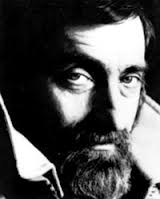
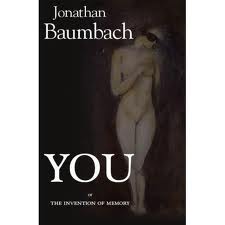
Jonathan Baumbach read this opening chapter of YOU, or The Invention of Memory in honor of Robert Coover last May at Brown University's UNSPEAKABLE PRACTICES V: CELEBRATING THE WORK OF ROBERT COOVER. His other 15 novels include Dreams of Molly, B, Reruns, and The Life & Times of Major Fiction. He has written about movies for Partisan Review and is a former chairman of The National Society of Film Critics. He recently retired from teaching at Brooklyn College.  |